
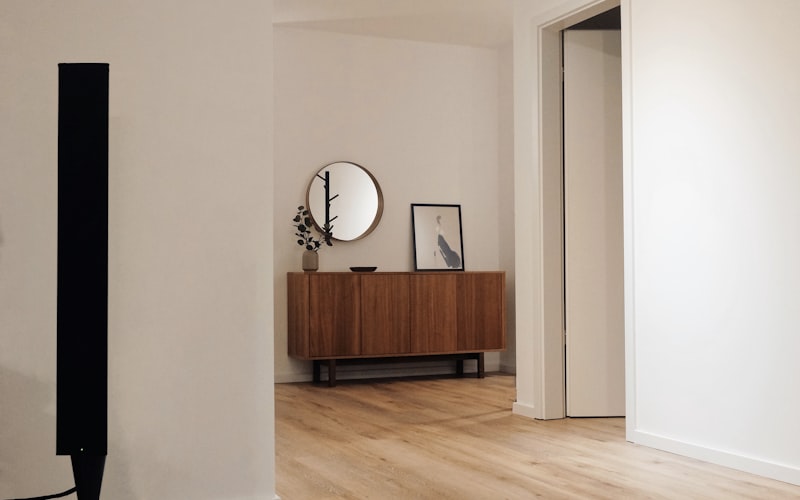
Flooring is one of the most visible and impactful elements of your home. It affects how rooms look, feel, and function. It also represents a significant investment, with whole-home flooring projects ranging from $3,000 to $30,000 or more depending on material and square footage. Choosing the right flooring means balancing aesthetics, durability, maintenance, comfort, and budget for each room in your home. This guide breaks down every major option so you can make informed decisions.
Flooring Materials Compared
Solid Hardwood
Solid hardwood remains the gold standard for flooring. Oak, maple, hickory, and walnut are the most popular species, each offering distinct grain patterns and color tones. Solid hardwood can be sanded and refinished multiple times over its 50- to 100-year lifespan, making it a true long-term investment. However, it's sensitive to moisture and temperature changes, which makes it unsuitable for basements, bathrooms, or areas prone to water exposure. Cost runs $6 to $15 per square foot for materials, plus $3 to $8 per square foot for professional installation.
Engineered Hardwood
Engineered hardwood features a real hardwood veneer bonded to a plywood or HDF core. This layered construction makes it more dimensionally stable than solid hardwood, meaning it handles humidity fluctuations better. It can be installed over concrete slabs and in basements where solid hardwood cannot. The top veneer can typically be refinished one to three times depending on its thickness. Cost is comparable to solid hardwood at $5 to $14 per square foot for materials, with slightly lower installation costs since many products feature click-lock systems.
Luxury Vinyl Plank (LVP)
LVP has become the fastest-growing flooring category for good reason. It's 100% waterproof, extremely durable, comfortable underfoot, and available in remarkably realistic wood and stone looks. Modern LVP with a rigid SPC (stone polymer composite) core resists dents, scratches, and temperature changes. It works in every room including basements, kitchens, and bathrooms. Most LVP installs as a floating floor with click-lock planks, making it one of the most DIY-friendly options. Cost ranges from $3 to $8 per square foot for materials.
Laminate
Laminate flooring consists of a photographic image layer over an HDF core, topped with a clear wear layer. It mimics the look of wood or stone at a lower price point than both hardwood and LVP. Modern laminate is more scratch-resistant than many competing products, making it excellent for homes with pets. However, traditional laminate is not waterproof. Water-resistant laminate options exist now but still can't match LVP's waterproof performance. Cost is $1.50 to $5 per square foot for materials.
Tile (Ceramic and Porcelain)
Tile is the undisputed champion for wet areas. Porcelain tile is denser and more water-resistant than ceramic, making it suitable for outdoor applications as well. Tile comes in an endless variety of colors, patterns, and sizes, including wood-look planks that provide the aesthetic of hardwood with the waterproof durability of tile. The downside is that tile is hard and cold underfoot (unless paired with radiant heating) and requires professional installation for best results. Cost ranges from $2 to $15 per square foot for materials, with installation adding $5 to $12 per square foot.
Carpet
Carpet provides warmth, sound absorption, and comfort that no hard-surface flooring can match. It's the preferred choice for bedrooms and bonus rooms where bare feet meet the floor. Modern stain-resistant carpets have improved dramatically, but carpet still traps allergens and is harder to clean than hard surfaces. It's not suitable for kitchens, bathrooms, or basements. Cost ranges from $2 to $8 per square foot for materials and padding, plus $1 to $3 per square foot for installation.
Cost Per Square Foot (Materials Only)
- Laminate: $1.50-$5.00
- Carpet: $2.00-$8.00
- Ceramic Tile: $2.00-$10.00
- LVP: $3.00-$8.00
- Engineered Hardwood: $5.00-$14.00
- Solid Hardwood: $6.00-$15.00
- Porcelain Tile: $3.00-$15.00
Professional installation typically adds $2-$10 per square foot depending on material and subfloor conditions. For a 1,500 sq ft home, total project costs range from $5,000 (laminate) to $35,000+ (solid hardwood throughout).
Best Flooring for Each Room
No single flooring material is ideal for every room. Here's a room-by-room breakdown based on the conditions each space presents:
- Kitchen: LVP, porcelain tile, or engineered hardwood. Waterproof or water-resistant is essential due to spills and splashes.
- Bathroom: Porcelain tile or LVP. Both handle standing water. Avoid hardwood and laminate.
- Living Room: Hardwood, engineered hardwood, or LVP. This is the showcase room where aesthetics matter most.
- Bedrooms: Carpet for comfort, or hardwood/LVP with area rugs. Personal preference drives this choice.
- Basement: LVP or engineered hardwood on a floating installation. Both handle the moisture and temperature fluctuations common in below-grade spaces.
- Entryway/Mudroom: Porcelain tile or LVP. These high-traffic, high-moisture areas need durable, waterproof materials.
DIY vs. Professional Installation
Some flooring materials are well-suited to DIY installation, while others require professional expertise for proper results.
Good DIY Options
- LVP (click-lock): The easiest flooring to install yourself. No glue, no nails. A floating floor that snaps together over most existing subfloors. Most homeowners can complete a room in a day.
- Laminate: Similar click-lock installation to LVP. Straightforward for anyone comfortable with basic measurements and a saw.
- Engineered hardwood (floating): Click-lock engineered hardwood installs similarly to LVP, though the material is less forgiving of subfloor imperfections.
Best Left to Professionals
- Tile: Requires mortar, grout, precise cuts, and level subfloor preparation. Poor tile installation leads to cracking, lippage, and water penetration.
- Solid hardwood (nail-down): Requires specialized tools, experience with acclimation, and skill in handling transitions and irregular layouts.
- Carpet: Stretching carpet properly requires a power stretcher and seaming iron that most homeowners don't own or know how to use.
Maintenance and Durability
Long-term satisfaction depends on choosing a material that matches your household's lifestyle and your willingness to maintain it:
- Hardwood: Sweep regularly, damp mop occasionally, refinish every 7-10 years. Avoid excess water. Scratches from pets and furniture are the primary concern.
- LVP: Sweep and mop freely. Virtually indestructible in normal residential use. Cannot be refinished, but individual planks can be replaced.
- Tile: Nearly indestructible surface. Grout lines require periodic sealing and can stain if neglected. Cracked tiles can be replaced individually.
- Laminate: Easy to sweep and clean. Avoid standing water. Cannot be refinished. Damaged planks can be difficult to replace mid-floor.
- Carpet: Vacuum twice weekly. Professional deep cleaning recommended annually. Typical lifespan of 8-15 years depending on quality and traffic.
The best flooring choice isn't the most expensive or the trendiest. It's the material that honestly matches how your household lives, what you're willing to maintain, and what your budget allows.
Flooring Trends and ROI
Current trends favor wide-plank formats, light to medium wood tones, and matte finishes across all hard-surface categories. Gray-toned floors that dominated the 2010s are declining in popularity, replaced by warm naturals and white oaks. Herringbone and chevron patterns are gaining traction in both hardwood and LVP.
From an investment standpoint, hardwood flooring consistently delivers the highest ROI at resale, recouping 70-80% of its cost. LVP is increasingly accepted by buyers, particularly in mid-range homes. Carpet in main living areas can actually hurt resale value, as most buyers plan to remove it. For the best return, install hardwood or LVP in main living areas and reserve carpet for bedrooms only.